The Future of AI Art: What to Expect in 2026 & Beyond
Written by ThumbPrompt Pro Team
We are a team of AI Prompt Engineers and Digital Creators. We test thousands of AI prompts to help you generate stunning images and high-converting thumbnails.
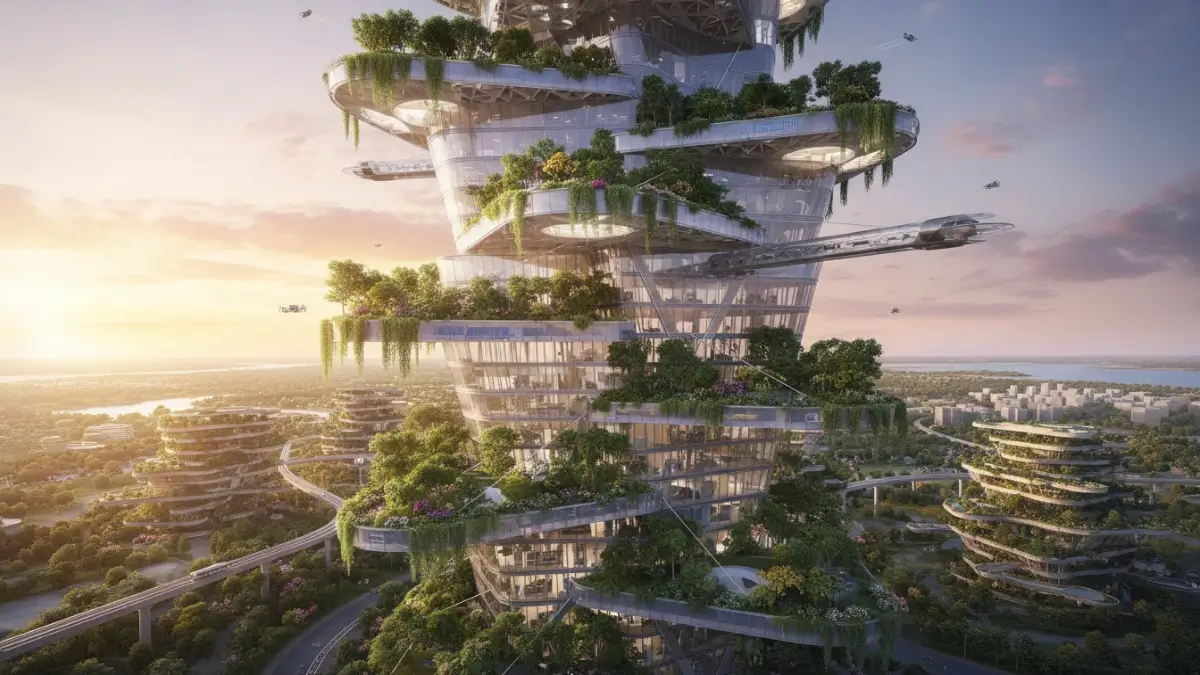
If you look back at the AI-generated images from just two years ago, they look like ancient history. We have gone from blurry, six-fingered monstrosities to hyper-realistic, award-winning masterpieces in the blink of an eye. But as we settle into 2026, the question on every creator's mind is: What comes next?
As someone who spends every day analyzing the intersection of technology and creativity, I can tell you that the future of ai art is about to undergo another massive shift. We are moving past the "novelty" phase and entering the era of deep integration, control, and multi-modal generation.
In this article, I will break down the top trends shaping the future of AI art in 2026, and how you can prepare to stay ahead of the curve.
1. The Rise of Absolute Control (Goodbye, Randomness)
Historically, using tools like Midjourney or DALL-E felt like pulling a slot machine lever. In the future of ai art, that changes entirely. You typed a prompt, crossed your fingers, and hoped for the best. If the character's jacket was the wrong color, you had to re-roll the entire image.
In 2026, absolute control is the new standard. We are seeing the widespread adoption of tools that allow for granular, layer-by-layer editing. Features like:
- Inpainting and Outpainting: Seamlessly expanding images or replacing specific elements without altering the rest of the composition.
- Pose Control (ControlNet): Uploading a stick figure or a reference photo to dictate the exact pose of the generated character.
- Character Consistency: The ability to generate the exact same character across multiple scenes, angles, and lighting conditions—a massive breakthrough for comic book artists and storytellers.
2. Text-to-Video Becomes Mainstream
We conquered static images; now, motion is the frontier. While early text-to-video models produced trippy, morphing nightmares, the models of 2026 are producing cinematic, temporally consistent footage.
Tools like Sora (by OpenAI) and advanced versions of Runway and Pika are allowing creators to generate B-roll, music videos, and even short films entirely from text prompts. The implications for YouTubers, filmmakers, and marketers are staggering. Instead of spending thousands on stock footage, creators can generate the exact 5-second clip they need, perfectly tailored to their script.
3. Real-Time Generation
Waiting 30 seconds for an image to generate is becoming a thing of the past. With the optimization of models like Stable Diffusion XL Turbo, we are entering the era of real-time generation.
Imagine sketching on a digital canvas, and as you draw a rough circle, the AI instantly renders it as a photorealistic apple in real-time. This immediate feedback loop is transforming AI from a "vending machine" into a true collaborative brush, allowing artists to paint with concepts rather than just pixels.
4. The Copyright and Ethics Resolution
The elephant in the room has always been copyright. For years, artists have rightfully raised concerns about their work being used in training data without consent or compensation.
In 2026, we are seeing the industry mature. Major platforms are implementing "opt-out" registries that actually work, and new models are being trained exclusively on licensed or public domain data (similar to Adobe Firefly's approach). Furthermore, blockchain and digital watermarking technologies are being used to track the provenance of images, ensuring that human artists can protect their original works and AI-generated content is clearly labeled.
5. AI as a Co-Pilot, Not a Replacement
The fear that "AI will replace artists" is shifting towards a more nuanced reality: "Artists who use AI will replace artists who don't."
Professional studios are not firing their art departments; they are supercharging them. Concept artists are using AI to generate 50 mood boards in an hour, picking the best elements, and then painting over them manually. Graphic designers are using AI to generate custom textures and backgrounds. The future of ai art belongs to the "AI Art Director"—someone with a human eye for taste, composition, and storytelling, armed with the infinite rendering power of AI.
How to Prepare for the Future
If you want to thrive in the future of ai art, here is my advice:
- Master Prompt Engineering: It is still the foundational skill. Learn the vocabulary of lighting, camera angles, and art styles. (Check out our Midjourney Prompt Guide).
- Learn the Control Tools: Don't just rely on text prompts. Learn how to use ControlNet, image-to-image, and inpainting to force the AI to execute your exact vision.
- Focus on Taste and Storytelling: When anyone can generate a beautiful image, beauty becomes a commodity. What will make you stand out is your unique perspective, your taste, and the stories you tell with your art.
Frequently Asked Questions (FAQs)
Will AI art generators ever be completely free?
While there will always be open-source models (like Stable Diffusion) that you can run for free on your own hardware, the top-tier, cloud-based models (like Midjourney v6 or DALL-E 3) will likely remain paid services due to the massive computing power required to run them.
Is AI art considered "real" art?
This is a philosophical debate, but the consensus in the commercial world is shifting. AI is increasingly viewed as a tool—like a camera or a digital paintbrush. The "art" lies in the human intention, the curation, and the emotional impact of the final piece, regardless of how the pixels were generated.
Conclusion
The future of AI art in 2026 is bright, fast, and incredibly exciting. We are moving from an era of random generation to an era of precise, collaborative creation. By embracing these tools and focusing on your unique human creativity, there has never been a better time to be a digital creator.
Ready to start creating? Head over to our Free AI Image Prompt Generator and start building the future today!